


कायदा जाणून घ्या
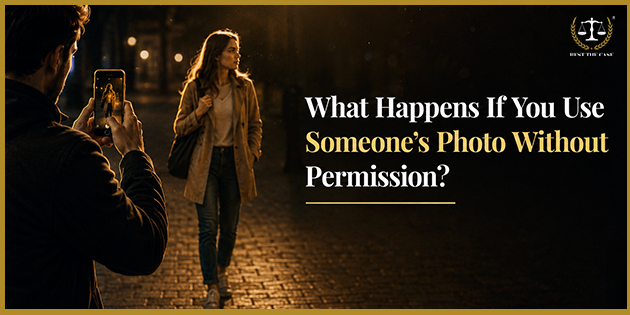
What Happens If You Use Someone’s Photo Without Permission?

1.2. The Information Technology (IT) Act, 2000
1.3. Personality and Publicity Rights
2. Civil vs. Criminal Consequences of Unauthorized Use 3. Are There Any Exceptions?3.1. Section 52 of the Copyright Act
4. What to Do If Your Photo Is Used Without Permission? 5. Case Laws5.1. Anil Kapoor v. Simply Life India & Ors
5.2. Ms. Ganga Rudraiah v. State of Karnataka
6. ConclusionUsing someone’s photo without their consent can lead to serious legal consequences under Indian law, primarily concerning copyright infringement and the Right to Privacy. Since the person who clicks a photo usually owns the copyright, using it for commercial purposes or public posts without a license can result in a legal notice or a lawsuit for damages. Furthermore, if the image is used in a way that harms the person's reputation, you could face charges of defamation. Under the Bharatiya Nyaya Sanhita (BNS), publishing private images without consent is a punishable offense, especially if it violates a person's modesty or personal space. Beyond civil lawsuits, digital platforms have strict policies against unauthorized content. If a person reports their photo, social media companies will likely issue a takedown notice, which can lead to your account being suspended or permanently banned. In more severe cases involving identity theft or creating fake profiles, the IT Act provides for imprisonment and heavy fines. In this blog, you will read about the Indian legal landscape to help you navigate copyright, privacy, and those tricky "personality rights."
Summary Details
In India, every photograph is legally protected as an "artistic work" under the Copyright Act, 1957. The person who takes the photo usually owns the rights to it, meaning you cannot use, share, or publish someone else’s image without their explicit permission. Simply "giving credit" or tagging the photographer is not a legal substitute for a license. If you use a photo for commercial gain without consent, you could face civil lawsuits for damages or even criminal penalties, including fines and jail time. While copyright protects the creator, the IT Act, 2000, and the Right to Privacy protect the person featured in the photo. Using someone’s image to violate their dignity or private life, especially through "deepfakes" or unauthorized commercial use of a celebrity's identity, is a serious offense. High Courts have consistently ruled that individuals have "personality rights," giving them control over how their name, voice, and likeness are used by others. |
|---|
Legal Framework: Is It Illegal To Use Someone’s Photo In India?
Yes, using someone’s image without the owner’s permission can be a problem. In India, image copyright laws are meant to protect both creative work and a person’s dignity. This means you usually need consent before using or sharing someone else’s image, especially for public or commercial purposes.
The Copyright Act, 1957
Under Section 2(c) of the Copyright Act, 1957, a photograph is treated as an “artistic work.” This means that as soon as someone takes a photo, it automatically gets legal protection. The photographer becomes the owner of that image and has rights over how it is used, shared, or copied. No registration is needed for this protection to apply.
One key point to understand is Section 17. It explains that the “author” of a photograph, meaning the person who actually took the picture, is considered the first owner of its copyright. This is important because many people assume that if they appear in a photo, they automatically have rights over it. In most cases, that is not true. Another important rule comes from Section 51, which deals with copyright infringement. This section says that copyright is violated when someone does something that only the copyright owner has the exclusive right to do, without getting proper permission. For example, actions such as publishing, sharing, reproducing, or distributing a photograph without a valid license from the owner would constitute infringement.
The Information Technology (IT) Act, 2000
Copyright law mainly protects the “work,” meaning the photo itself and the rights of the person who created it. But the Information Technology (IT) Act focuses on protecting the “person” in the image. This means the law is not only about who owns the photo, but also about whether the person in the photo is treated with dignity and respect. If you use a photo in a way that violates someone’s private or intimate life, it is not just a copyright issue anymore. It can become a criminal matter. Section 66E of the IT Act, 2000, clearly states that capturing, sharing, or publishing images of a person’s private areas without their consent is punishable by law. This applies even if the photo was taken by someone else or shared online.
Personality and Publicity Rights
Have you ever noticed a small shop using a Bollywood star’s face to promote a product, like soap, even though the celebrity never agreed to it? That situation can violate what are called “personality rights.” Personality rights come from the idea of privacy and personal dignity under Article 21 of the Constitution of India, which guarantees the right to life and personal liberty. Courts have interpreted this to include a person’s control over their name, image, voice, and identity. For celebrities, this is especially important because their identity has commercial value.
Civil vs. Criminal Consequences of Unauthorized Use
If someone is caught using photos without permission in India, the consequences fall into two types: civil and criminal. Civil actions usually involve paying money as damages or following court orders. Criminal charges can lead to fines or even jail time.
Civil Remedies
Most copyright battles start in civil courts. The owner can ask for:
- Interim Injunctions: Interim injunctions are quick court orders that require you to remove a photo right away. They are issued to prevent further harm while the case is still ongoing.
- Damages: Damages mean you may have to pay money to the owner for the loss they faced because you used their work without permission. It is a way to compensate them for unfair use, especially if they missed out on earnings or proper credit due to your actions.
- Account of Profits: Account of profits means that if you earned money using someone else’s photo without permission, you may have to give all that money to the original owner.
Criminal Penalties
Many people do not realize that image copyright laws in India are strict and strongly enforced. Under Section 63 of the Copyright Act, infringement is a serious offense that police can act on without waiting for a complaint.
- Imprisonment for a term of 6 months to 3 years.
- A fine ranging from ₹50,000 to ₹2,00,000.
Are There Any Exceptions?
Not every use of a photo is illegal. India follows the concept of “fair dealing,” which is similar to “fair use” in the US. It allows limited use of copyrighted images without permission in certain cases, like for education, research, criticism, review, or reporting current events, as long as the use is reasonable and not harmful to the owner.
Section 52 of the Copyright Act
This section lists activities that do not count as infringement:
- Private or Personal Use: Private or personal use means using a photo only for your own study or research, not for any business or public purpose. According to Section 52 of the Copyright Act, as long as you are not earning money from it or sharing it widely, this type of use is generally allowed under fair dealing rules in India.
- Criticism or Review: Criticism or review means you can use a photo when you are discussing or analyzing something. For example, a movie critic can use a still from a film to talk about its cinematography. The use should be limited, relevant to the review, and not just for decoration or profit.
- Reporting Current Events: Reporting current events means using images to share news with the public, such as in newspapers, on TV, or online reports. This is allowed under fair dealing if the image is used only to explain or support the news, and not for unrelated or commercial purposes.
What to Do If Your Photo Is Used Without Permission?
If you are a creator and find someone else profiting from your hard work, here is a simple roadmap to protect your image under copyright laws in India.
- Document Everything: Take screenshots, save the links (URLs), and note the dates. This helps you keep clear proof that the photo was used without permission. Having proper evidence is important if you decide to take legal action or need to show what actually happened. Document everything carefully.
- The "Cease and Desist" Notice: A “cease and desist” notice is a formal letter sent by a lawyer asking the person to stop using your photo immediately. It also warns of legal action if they don’t comply.
- Takedown Notices: Takedown notices are requests you can send to platforms like Instagram, Facebook, and Google to remove content that uses your photo without permission. These platforms have copyright complaint forms, and they usually act quickly, often faster than going to court, making them a practical first step.
- Cyber Cell Complaint: A cyber cell complaint is useful if the misuse involves harassment or a privacy violation under Section 66E of the IT Act. You can report it through the National Cyber Crime Reporting Portal.
Case Laws
A few case laws are as follows:
Anil Kapoor v. Simply Life India & Ors
Facts: In this case, the famous actor Anil Kapoor noticed that several websites were using AI to create "deepfakes" of him, using his voice, image, and his famous catchphrase "Jhakaas" to sell products and even create offensive content.
Judgment: The Delhi High Court issued a landmark "John Doe" order (an order against unknown defendants). The court ruled that using a celebrity's persona, likeness, or voice without permission is a violation of their Personality Rights. The judge noted that while "free speech" allows for parody, it does not allow someone to commercially exploit a person’s hard-earned fame without consent.
Ms. Ganga Rudraiah v. State of Karnataka
Facts: This case involved the copyright of photographs from the classic film 'Aval Appadithan'. The legal heirs of the producer (the "author" under law) claimed that their copyright was being infringed by unauthorized exhibition and usage of the movie's production stills.
Judgment: The Madras High Court clarified that photographs taken during the making of a film are "Artistic Works" under Section 2(c). It reaffirmed that the producer, who commissioned the work, is the first owner. This case is a reminder that even "old" photos are protected, and the rights pass down to legal heirs, making unauthorized use of photos in India a risk even for vintage content.
Conclusion
The internet has made sharing ideas effortless, making the world feel smaller than ever. However, this accessibility does not mean digital content is a free-for-all. In India, image copyright and privacy laws are in place to ensure that photographers and individuals maintain control over their creative work and personal identity. Respecting these boundaries is about more than just avoiding legal notices or hefty fines; it is about valuing the time, effort, and dignity of others. Whether you are a content creator or a casual social media user, it is always safer to seek permission or use licensed material. By following these legal guidelines, you protect yourself from civil and criminal liabilities while contributing to a more ethical and professional digital environment for everyone.
Disclaimer: This blog is for general information only. It does not provide any professional legal advice or guidance. If you need help, please talk to a qualified and experienced family lawyer.

 तज्ञ सल्ला आणि उपाय मिळवा
कौटुंबिक, मालमत्ता, गुन्हेगारी प्रकरणे आणि इतर सर्व कायदेशीर बाबींसाठी अनुभवी वकील
आता सल्ला घ्या