


Business & Compliance
Can AI Draft Legally Valid Contracts? Risks Every Business Should Know
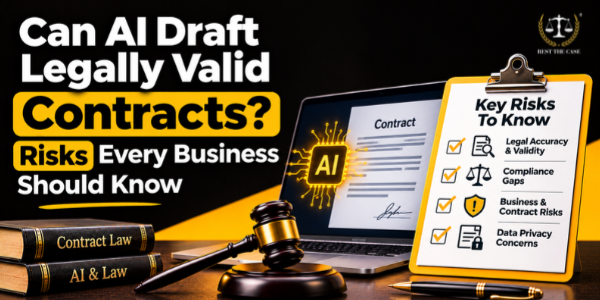

Artificial intelligence has transformed contract drafting into a fast, accessible process, yet speed alone does not guarantee enforceability under Indian law. Understanding the legal validity, risks, and necessary safeguards ensures your AI-assisted agreements effectively protect your business.
Can AI Draft Legally Valid Contracts in India?
AI can help prepare contracts, but their legal validity depends on whether they satisfy the requirements of Indian law. Businesses should review every AI-generated agreement before signing.
- Legal validity: AI-drafted contracts can be legally valid if they satisfy the requirements of applicable Indian laws.
- Essential requirements: Section 10 of the Indian Contract Act, 1872, requires free consent, competent parties, lawful consideration, and a lawful object, among other conditions.
- AI does not determine validity: Using AI does not automatically make a contract valid or invalid. Its contents and compliance with legal requirements matter.
- Review before signing: Verify the parties, obligations, payment terms, and enforceability to avoid contractual disputes.
What Types of Business Contracts Can AI Help Draft?
- Non-disclosure agreements (NDAs): Help protect confidential information shared with employees, vendors, and business partners.
- Vendor and service agreements: Outline deliverables, payment terms, responsibilities, and timelines between parties.
- Employment and consultancy agreements: Define job responsibilities, compensation, confidentiality and termination conditions.
- Freelance contracts: Clarify project scope, milestones, revisions, and payment obligations.
- Commercial agreements: Assist with initial drafts for partnerships, licensing, and other business arrangements.
- Complex agreements: High-value or high-risk contracts require detailed legal review to address specific commercial and legal concerns.
What Are the Biggest Legal Risks of Using AI to Draft Contracts?
- Incorrect legal clauses: AI may suggest outdated, unsuitable or legally inconsistent provisions.
- Missing contractual protections: Important clauses covering indemnity, liability, termination or dispute resolution may be overlooked.
- Incorrect legal references: AI may generate inaccurate statutory provisions or fabricated case law.
- Unclear wording: Vague contractual language can create confusion about the parties' responsibilities.
- Unbalanced agreements: Drafts may favour one party without clearly addressing the commercial consequences.
- Confidentiality risks: Uploading sensitive contracts to AI tools may expose information, depending on their data-handling practices.
Which Contract Clauses Should Businesses Never Accept Without Review?
Certain clauses directly affect financial obligations, legal responsibilities, and dispute resolution. Businesses should carefully review these provisions before signing.
- Payment terms: Verify payment amounts, deadlines, taxes, late fees, and consequences of non-payment.
- Indemnity and liability: Understand which losses are covered and whether liability limits are commercially reasonable.
- Termination clauses: Check termination rights, notice periods, and obligations after termination.
- Confidentiality and data protection: Define protected information and permitted uses, disclosures and safeguards.
- Intellectual property: Clearly establish ownership and usage rights over software, content, designs and other deliverables.
- Dispute resolution: Review governing law, jurisdiction, arbitration clauses, and dispute procedures.
- Stamping and registration: Confirm whether the agreement requires stamp duty, registration, or other legal formalities.
Can AI-Drafted Contracts Be Signed Electronically in India?
Yes, AI-drafted contracts may generally be executed electronically if they satisfy applicable legal requirements. However, electronic execution does not automatically guarantee enforceability.
- Electronic contracts: Section 10A of the Information Technology Act, 2000, recognises that contracts are not unenforceable merely because electronic means were used.
- Validity requirements: Electronic execution does not remove the requirements of a valid contract under applicable law.
- Record preservation: Maintain signed copies, approval records, email exchanges and relevant communications as evidence.
- Execution formalities: Check whether the agreement requires a specific signature method, stamping, registration, or additional formalities.
- Legal exceptions: Certain documents and transactions may be excluded from electronic recognition or require additional compliance.
What Happens If an AI-Drafted Contract Contains a Legal Error?
- Contractual disputes: Missing or unclear clauses may create disagreements over payments, responsibilities, termination, or liability.
- Financial losses: Poorly drafted provisions can expose businesses to unexpected expenses, claims, and legal costs.
- Enforcement difficulties: Defective or unsuitable terms may create challenges when enforcing contractual rights.
- Preserve documents: Keep signed agreements, earlier drafts, emails, and related communications for future reference.
- Seek legal advice: Consult a lawyer before signing questionable terms or acting on a disputed contractual provision.
AI-Drafted Contracts vs Lawyer-Drafted Contracts: What Is the Difference?
- Draft preparation: AI can generate an initial draft quickly, while lawyers prepare drafts based on client instructions and legal review.
- Business context: AI depends on the information provided, whereas lawyers can assess the specific commercial circumstances of a transaction.
- Legal accuracy: AI-generated clauses require independent verification, while lawyers apply legal knowledge and professional judgment.
- Risk identification: AI may overlook transaction-specific risks, whereas lawyers can identify and address potential legal issues.
- Negotiation: AI can suggest alternative clauses, while lawyers can advise on negotiation strategies and contractual protections.
- Accountability: Responsibility depends on the AI tool, provider, and circumstances, while lawyers may have applicable professional duties.
- Best use: AI is useful for initial drafts and routine agreements, while lawyer-led drafting is preferable for complex, high-value or high-risk contracts.
How Can Businesses Use AI Safely for Contract Drafting?
- Provide clear instructions: Specify the parties, scope, deliverables, payment terms, deadlines, and responsibilities to get a relevant draft.
- Use approved AI tools: Check privacy policies and data-handling practices before sharing confidential business information.
- Identify missing clauses: Ask AI to highlight missing provisions and potential risks, not just generate contract wording.
- Verify legal references: Independently check statutory provisions, legal clauses, and jurisdiction-specific requirements.
- Obtain legal review: Have the final agreement reviewed by an appropriate professional before signing.
- Maintain records: Preserve draft versions, approval records, and final signed copies for future reference.
Also Read: Privacy Policy & Website Legal Compliance Checklist
AI Contract Drafting Checklist for Businesses
Checklist Item | What to Verify |
|---|---|
Parties | Correct legal names and authority to sign. |
Scope | Clear deliverables and responsibilities. |
Payment | Amounts, deadlines, taxes, and payment conditions. |
Liability | Indemnity and limitation of liability clauses. |
Termination | Exit conditions and notice periods. |
Confidentiality | Protection of sensitive information. |
Intellectual property | Ownership and permitted usage rights. |
Disputes | Governing law and dispute resolution process. |
Legal accuracy | Verification of clauses and legal references. |
Formalities | Applicable stamp duty, signatures and registration. |
Data security | Appropriate handling of confidential information. |
Final approval | Completion of business and legal review before signing. |
Explore More Legal Guides
- Who Owns AI-Generated Content? Copyright, Ownership & Legal Risks Explained
- AI Content Legal Issues In India
- AI Compliance Guide For Businesses In India: Laws, Risks And Best Practices
Conclusion
AI has made contract drafting faster and more accessible for businesses, but relying on AI-generated agreements without proper review can create legal and commercial risks. Businesses should verify contractual clauses, ensure compliance with applicable laws, and protect confidential information before signing. Combining AI assistance with professional legal review can help businesses prepare reliable contracts, safeguard their interests, and reduce the chances of future disputes.
Disclaimer: This blog is for general informational and educational purposes only and does not constitute legal or professional advice. Laws may change, so readers should consult a qualified Corporate Lawyer for advice specific to their business and circumstances.
Frequently Asked Questions
Q1. Is a contract drafted by ChatGPT legally valid in India?
Yes, a contract drafted using ChatGPT can be legally valid if it satisfies the requirements of the Indian Contract Act, 1872. Its validity depends on its terms and compliance with applicable law.
Q2. Can AI draft an NDA or vendor agreement?
Yes, AI can prepare initial drafts of NDAs and vendor agreements. However, confidentiality, payment, liability and termination clauses should be reviewed before signing.
Q3. Can a business sign an AI-drafted contract without a lawyer?
Yes, there is no general requirement that every contract must be drafted by a lawyer. However, legal review is advisable for complex, high-value or high-risk agreements.
Q4. Who is responsible if an AI-generated contract contains an error?
Responsibility depends on the circumstances, contractual obligations and applicable law. Businesses should independently verify AI-generated content before relying on it.
Q5. Are AI-generated contracts legally binding?
Yes, they can be legally binding if they satisfy the requirements of a valid contract under applicable law. Using AI does not automatically affect their enforceability.

 Get Expert Advice and Solutions
Experienced lawyers for all legal matters wether it is for Family, Property, Criminal Cases, and More
Consult Now