


Business & Compliance
What Records Must A Company Maintain Under Indian Company Law?
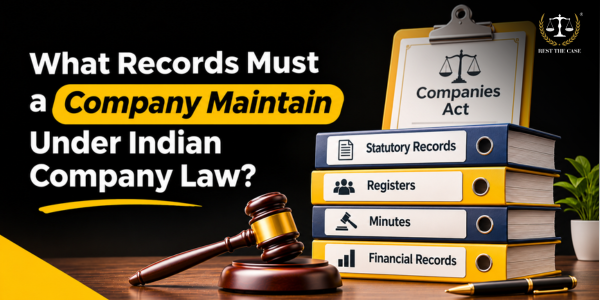

Companies in India must maintain various statutory registers, financial records, meeting minutes, tax documents and employee records under applicable laws. The exact requirements depend on the company's structure and activities, with the Companies Act, 2013 prescribing key recordkeeping and preservation obligations.
What Records Must a Company Maintain in India?
- Statutory registers: Register of members, directors, charges and other applicable statutory registers.
- Financial records: Books of accounts, invoices, vouchers, ledgers and financial statements.
- Board records: Board Meeting notices, agendas, attendance registers and minutes.
- Shareholder records: Share certificates, share transfer records and general meeting minutes.
- MCA filings: Filed annual returns, financial statements and event-based forms.
- Tax records: GST returns, tax invoices, TDS records and income tax documents.
- Employee records: Appointment letters, payroll, attendance and applicable statutory registers.
- Contracts and legal documents: Agreements, licences, regulatory approvals and intellectual property records.
The exact records depend on the company's structure, size, activities and applicable laws. Not every record or statutory register applies to every company.
What Statutory Registers Must a Company Maintain?
- Register of Members: Maintain members' names, addresses, shareholding, and changes in membership under Section 88 of the Companies Act, 2013.
- Register of Directors and KMP: Record details of directors and key managerial personnel, including appointments and changes, under Section 170.
- Register of Charges: Record charges created, modified, or satisfied over company assets, as required under the Companies Act, 2013.
- Register of Loans and Investments: Maintain details of applicable loans, guarantees, securities and acquisitions under Section 186.
- Register of Contracts and Arrangements: Document contracts and arrangements in which directors are interested under Section 189.
- Register of Share Transfers: Maintain records of share transfers, allotments and other applicable securities transactions.
- Register of Significant Beneficial Owners: Maintain declarations and details of significant beneficial owners, where applicable, under the prescribed rules.
The Companies (Management and Administration) Rules, 2014 prescribe relevant formats and requirements for maintaining applicable statutory registers.
What Financial and Accounting Records Must a Company Maintain?
- Books of Accounts: Maintain cash books, journals, and ledgers recording the company's financial transactions.
- Sales and Purchase Invoices: Preserve invoices and bills supporting business sales, purchases and other transactions.
- Bank Records: Maintain bank statements, payment records and bank reconciliation statements.
- Expense Vouchers: Preserve receipts, bills and supporting documents for business expenditure.
- Fixed Asset and Inventory Records: Record company assets, depreciation and stock movements, where applicable.
- Financial Statements and Audit Reports: Maintain balance sheets, profit and loss statements, applicable cash flow statements and statutory audit reports.
- Loans and Related-Party Transactions: Preserve details of loans, advances and related-party financial transactions.
- Books of account maintenance: Section 128 requires companies to maintain books of accounts at the registered office or another permitted location, including electronically.
- Record preservation: Preserve books of accounts and supporting documents for at least eight financial years, or longer if required by an investigation.
What Board Meeting and Shareholder Records Must a Company Maintain?
- Meeting Notices and Agendas: Preserve notices, agendas and supporting documents circulated before Board and general meetings.
- Attendance Records: Maintain attendance registers or other permitted records of participation in meetings.
- Meeting Minutes: Record proceedings, discussions and decisions of Board Meetings and general meetings.
- Board and Shareholder Resolutions: Preserve formal approvals relating to appointments, investments and important corporate decisions.
- Committee Meeting Records: Maintain notices, attendance records and minutes of committee meetings, where applicable.
- Shareholder Notices: Preserve general meeting notices and explanatory statements issued to shareholders.
- Voting and Proxy Records: Maintain voting results, proxy appointments, poll records and electronic voting details, where applicable.
- Minutes maintenance: Section 118 of the Companies Act, 2013 requires companies to maintain minutes of general meetings, Board Meetings and specified committee meetings. Companies must follow applicable rules and Secretarial Standards.
What Employee and Payroll Records Must a Company Maintain?
- Appointment Letters and Employment Agreements: Maintain signed appointment letters, employment contracts and relevant amendments.
- Employee Details: Record employee names, addresses, joining dates, designations, and other employment particulars.
- Attendance and Leave Records: Maintain working hours, attendance, weekly offs, and leave details under applicable employment requirements.
- Salary and Payroll Records: Preserve salary registers, payslips, wage payment details, deductions, and reimbursement records.
- PF and ESI Records: Maintain applicable employee contribution details, payment challans, and statutory filings.
- TDS and Payroll Tax Records: Preserve tax deduction details, employee declarations, Form 16 and relevant TDS returns.
- Disciplinary and Exit Records: Maintain disciplinary proceedings, resignation letters, termination documents, and full-and-final settlement records.
- POSH Records: Maintain applicable workplace policies, Internal Committee details, annual reports and complaint-related records under the POSH Act, 2013.
Also Read: HR Legal Compliance Checklist For Employers In India
How Long Must a Company Preserve Its Records?
Record type | General retention requirement |
|---|---|
Books of accounts and supporting vouchers | At least 8 financial years |
Annual returns and statutory registers | As prescribed under applicable rules |
Board and general meeting minutes | Permanently |
Employee and payroll records | As prescribed under applicable labour and tax laws |
Tax invoices and GST records | Generally 72 months from the due date of the relevant annual return, subject to exceptions |
Contracts and legal documents | Based on contractual, statutory and limitation requirements |
What Happens If a Company Fails to Maintain Required Records?
- Compliance issues: Missing records may lead to compliance gaps during statutory audits, inspections or regulatory reviews.
- Penalties: The company and officers in default may face penalties under applicable provisions of the Companies Act, 2013.
- Financial difficulties: Missing accounting records can make it difficult to verify transactions, financial positions and ownership details.
- Due diligence problems: Incomplete registers and meeting minutes can create difficulties during fundraising, share transfers and business transactions.
- Employee and tax disputes: Missing payroll, tax or employment records can lead to disputes and regulatory complications.
How Can a Company Organise and Maintain Its Records Properly?
- Organise records: Create separate folders for corporate, financial, tax, and employee documents.
- Update registers: Maintain statutory registers after every relevant change or transaction.
- Secure documents: Store signed agreements, resolutions and meeting minutes safely.
- Maintain backups: Keep digital backups and restrict access to confidential records.
- Assign responsibility: Allocate recordkeeping duties to specific employees or authorised personnel.
- Conduct reviews: Review company records periodically with the Company Secretary (CS), Chartered Accountant (CA) or legal adviser.
- Follow retention periods: Preserve records according to statutory timelines and extend retention where disputes or investigations require it.
Conclusion
Maintaining proper company records is essential for legal compliance, financial transparency and smooth business operations. By keeping statutory registers, accounting documents, meeting minutes and other applicable records updated, companies can reduce compliance risks and handle audits, inspections and business transactions more effectively.
Regular record reviews and proper digital storage also help businesses meet their obligations under the Companies Act, 2013, and other applicable laws.
Disclaimer: This blog is for general informational and educational purposes only and does not constitute legal or professional advice. Laws may change, so readers should consult a qualified Corporate Lawyer for advice specific to their business and circumstances.
Frequently Asked Questions
Q1. Is every company required to maintain statutory registers?
Companies must maintain the statutory registers applicable to their structure and activities under the Companies Act, 2013.
Q2. Where should a company keep its statutory records?
Generally, statutory registers are maintained at the registered office, subject to permitted alternatives and applicable legal requirements.
Q3. Can a company maintain records electronically?
Yes, companies can maintain books of accounts and specified records electronically, subject to applicable rules and prescribed conditions.
Q4. How many years must a company preserve its books of accounts?
Under Section 128 of the Companies Act, 2013, books of accounts and supporting papers must generally be preserved for at least eight financial years.
Q5. Are small companies required to maintain statutory registers?
Yes, small companies must maintain applicable statutory registers, although certain exemptions and simplified compliance requirements may apply.

 Get Expert Advice and Solutions
Experienced lawyers for all legal matters wether it is for Family, Property, Criminal Cases, and More
Consult Now