


Business & Compliance
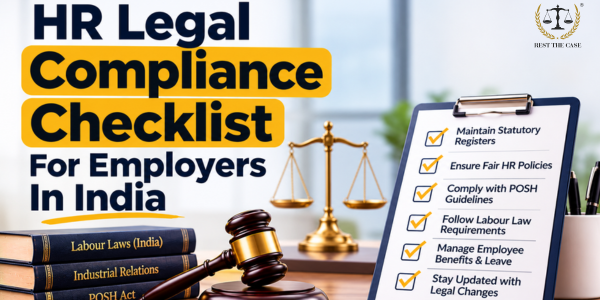
HR Legal Compliance Checklist For Employers In India

1.1. Key Factors That Decide Which Laws Apply
1.2. Benefits of Maintaining a Centralised Compliance Checklist
2. Understanding India's Four Labour Codes2.1. Other Important Employment Laws
3. HR Compliance Checklist for Hiring and Employee Onboarding3.1. Important Onboarding Practices
4. Salary, Minimum Wages and Payroll Compliance 5. Working Hours, Overtime, Weekly Offs and Leave 6. PF, ESI, Gratuity and Other Employee Benefits6.1. Employees' Provident Fund (EPF)
6.2. Employees' State Insurance (ESI)
7. POSH Compliance and Prevention of Workplace Harassment 8. Employee Safety, Workplace Policies and Grievance Redressal8.1. Important Workplace Policies
8.2. Establish a Clear Grievance Process
9. HR Documentation and Statutory Records Employers Must Maintain 10. Employee Termination, Resignation and Full-and-Final Settlement10.3. Full-and-Final (FnF) Settlement
11. Employee Data Privacy and Confidentiality Compliance 12. HR Legal Compliance Checklist for Employers 13. ConclusionHR legal compliance is essential for every business, from startups to multinationals. This checklist helps Indian employers understand their responsibilities and manage key legal requirements across the entire employee lifecycle on time.
What Should Employers Include in an HR Legal Compliance Checklist?
An HR legal compliance checklist is a practical document that helps a business follow the employment laws applicable to its operations. HR compliance covers almost every stage of employment, including:
- Recruitment and employee onboarding.
- Employment agreements and appointment letters.
- Salary structure and minimum wage requirements.
- Working hours, overtime and weekly holidays.
- Provident Fund, ESI, gratuity and other benefits.
- Workplace safety and employee welfare.
Key Factors That Decide Which Laws Apply
Several core business details determine which specific labour laws and compliance rules an organisation must follow in India.
- Location of the business: Labour laws vary by state. State-specific Shops and Establishments laws regulate working hours, weekly off, overtime, leave, opening/closing times, and public holidays.
- Type of establishment: Rules change depending on whether the workplace is a factory, commercial office, IT firm, mine, educational institution, or another type of setup.
- Number of employees: Many labour laws apply only after a company reaches a certain headcount- such as thresholds for EPF, ESI, gratuity, and POSH compliance.
- Nature of the business: Industries with specific working conditions- like hazardous work, night shifts, continuous production, or contract labour-must follow extra safety and employment rules.
Also Read: Employer's Guide To Handling POSH Complaints In India
Benefits of Maintaining a Centralised Compliance Checklist
- Track important deadlines: HR teams can monitor monthly EPF and ESI payments, tax deductions, and annual statutory filings.
- Maintain proper records: Employee registers, salary records, attendance details, and payment receipts remain organised for inspections and audits.
- Reduce legal risks: Regular checks help identify compliance gaps before they become expensive disputes or penalties.
- Maintain consistency: Businesses with multiple branches can follow standard internal procedures while making necessary changes for state-specific requirements.
Understanding India's Four Labour Codes
India combined 29 central labour laws into four simple Labour Codes:
- Code on Wages, 2019: Ensures every worker gets fair, equal pay and bonuses on time.
- Industrial Relations Code, 2020: Sets fair rules for hiring, firing, workplace conduct, trade unions, and solving disputes.
- Code on Social Security, 2020: Provides a financial and medical safety net through EPF, ESI, gratuity, and maternity leave.
- Occupational Safety, Health and Working Conditions (OSH) Code, 2020: Guarantees safe, healthy workplaces and fair working hours across industries.
Other Important Employment Laws
- POSH Act, 2013: The Sexual Harassment of Women at Workplace (Prevention, Prohibition and Redressal) Act requires covered organisations to establish a proper complaint-handling system. An Internal Committee is required at workplaces with 10 or more employees.
- State Shops and Establishments Acts: These laws regulate working hours, overtime, leave, weekly holidays, and other conditions for covered commercial establishments.
- Professional Tax and Income Tax: Employers may have to deduct and deposit professional tax under applicable state laws and tax deducted at source (TDS) under central tax rules.
- Rights of Persons with Disabilities Act, 2016: Covered establishments must follow applicable equal opportunity requirements and consider reasonable workplace accommodations.
HR Compliance Checklist for Hiring and Employee Onboarding
The employment relationship begins with recruitment and onboarding. A simple onboarding process generally follows these steps:
- Issue an offer letter and appointment letter.
- Collect necessary employee documents.
- Complete statutory and payroll registrations.
- Share workplace policies and obtain employee acceptance.
Important Onboarding Practices
- Issue written employment agreements: Employers should provide employees with appointment letters or written employment agreements before or on their joining date, as required by applicable law.
- Clearly mention employment terms: The agreement should explain the employee's designation, salary, allowances, work location, working hours, probation period, leave entitlement, and notice period.
- Collect only necessary documents: During onboarding, employers may collect documents such as identity proof, PAN, educational certificates, previous employment records, and bank account details.
- Complete statutory registrations: The HR and payroll teams should complete applicable registrations and documentation, including EPF-related UAN arrangements, ESI enrolment, and tax withholding details.
- Share company policies: Every new employee should receive the Employee Handbook, Code of Conduct, Anti-Harassment Policy and Grievance Redressal Policy.
Salary, Minimum Wages and Payroll Compliance
- Follow minimum wage notifications
Employers must check the minimum wage rates notified by the relevant state government. Rates may differ according to skill categories, such as unskilled, semi-skilled, skilled and highly skilled workers.
- Pay salaries on time
Monthly wages must be paid within the time prescribed by the applicable law. The relevant deadline may depend on factors such as employee strength and the applicable statutory framework.
- Review salary structures
The Code on Wages, 2019 provides a common definition of wages and limits certain exclusions from the wage calculation. Under the framework described in the Code, specified exclusions cannot exceed 50% of total remuneration.
- Issue clear payslips
Employees should receive payslips showing the salary components and deductions. A detailed payslip generally includes:
- Basic salary and allowances.
- Gross salary.
- EPF and ESI deductions, where applicable.
- Professional tax and TDS.
- Attendance and working days.
- Net salary payable.
- Match attendance with payroll
Payroll calculations should match attendance records, approved leave, overtime details, and shift schedules. Any difference should be checked before salaries are processed.
- Maintain payment records
Employers should preserve wage registers, bank transfer records, payslips and other payment-related documents.
Working Hours, Overtime, Weekly Offs and Leave
- Daily and weekly working hours
Employers must follow the prescribed limits on daily and weekly working hours. The general limits mentioned in the compliance framework are around 8 to 9 hours a day and up to 48 hours a week, subject to the applicable law.
- Overtime payment
Employers should maintain accurate records of overtime work. Where the applicable law requires double wages, overtime must be paid at twice the ordinary rate.
- Weekly holidays and public holidays
Employees should receive the prescribed weekly rest day. Depending on the nature of the business, this may be Sunday or a rotational weekly off.
- Leave and leave encashment
Companies should maintain clear leave policies covering earned leave, casual leave, and sick leave, wherever applicable.
- Safety during night shifts
Employers scheduling women employees for night shifts must follow applicable state requirements. These may include safe transportation, proper lighting, security arrangements, and emergency support systems.
PF, ESI, Gratuity and Other Employee Benefits
Every employer in India must provide certain mandatory financial and health benefits once their team reaches a specific size. Below is a simple breakdown of these key statutory benefits, who they apply to, and how they work.
Employees' Provident Fund (EPF)
- When it applies: Companies with 20 or more employees.
- How it works: Both the employee and employer contribute 12% of the employee's basic salary toward retirement savings (the employer's share is split between the Provident Fund and the Pension Scheme).
Employees' State Insurance (ESI)
- When it applies: Companies with 10 or more employees (in most states).
- How it works: Provides medical and cash benefits for employees earning up to ₹21,000 a month. The employer contributes 3.25% of the wages, and the employee contributes 0.75%.
Gratuity
- When it applies: Companies with 10 or more employees.
- How it works: A lump-sum thank-you payment given to an employee when they leave the company, provided they have worked there continuously for at least 5 years (with a few legal exceptions, such as death or disability).
Maternity Benefit
- When it applies: Companies with 10 or more employees.
- How it works: Eligible female employees get up to 26 weeks of paid leave during pregnancy and after childbirth, based on legal rules.
Statutory Bonus
- When it applies: Companies with 20 or more employees.
- How it works: An annual bonus paid to eligible employees who fall within the government-set salary limits and meet basic attendance rules.
POSH Compliance and Prevention of Workplace Harassment
- Set up an Internal Committee
Every office or branch employing 10 or more employees must have an Internal Committee (IC), as required under the Act. The committee must be headed by a senior woman employee.
- Prepare an Anti-Sexual Harassment Policy
Employers should create a written policy explaining what constitutes sexual harassment, how employees can submit complaints and what action may follow.
- Conduct employee training
Employees should receive regular awareness sessions explaining workplace behaviour, reporting channels and the consequences of sexual harassment.
- Follow the inquiry process
Complaints must be handled confidentially and according to the procedure prescribed by the POSH Act. The Act generally provides 90 days for completing an inquiry, 10 days for submitting the inquiry report after completion and 60 days for implementing recommendations.
- Complete annual reporting
Employers should prepare the required POSH annual report and submit it to the relevant District Officer within the applicable deadline.
Employee Safety, Workplace Policies and Grievance Redressal
A safe and respectful workplace is important for both employees and employers.
Physical and Mental Workplace Safety
- Proper ventilation and clean drinking water.
- Adequate washrooms and sanitation facilities.
- First-aid kits and emergency medical arrangements.
- Fire safety equipment and emergency exits.
- Regular safety drills and evacuation plans.
Important Workplace Policies
- Code of Business Conduct and Ethics.
- Disciplinary and Escalation Policy.
- Information Security and IT Asset Usage Rules.
- Equal Opportunity and Anti-Discrimination Policy.
- Remote Work and Hybrid Operations Policy.
- Grievance Redressal Policy.
Establish a Clear Grievance Process
- Informal discussion: The employee first raises the issue with the reporting manager, where appropriate.
- Formal complaint: If the issue remains unresolved, the employee submits a written complaint through HR or an internal portal.
- Internal review: HR or the designated team examines the complaint and records relevant information.
- Written resolution: The organisation communicates its decision and takes suitable corrective action.
HR Documentation and Statutory Records Employers Must Maintain
Compliance area | Important records |
|---|---|
Hiring and onboarding | Offer letters, appointment agreements, employee details and background verification records. |
Payroll and wages | Wage registers, payslips, overtime records, bank payment statements and tax deduction receipts. |
Social security | EPF and ESI challans, contribution records, nomination forms, gratuity calculations and bonus payment records. |
Working conditions | Attendance registers, shift schedules, leave records, muster rolls and accident registers. |
POSH compliance | Internal Committee details, training records, complaint files, inquiry reports and annual reports. |
Employee relations | Disciplinary notices, warnings, inquiry documents, grievance records and standing order approvals, where applicable. |
Employee separation | Resignation letters, termination letters, handover records, exit documents and final settlement receipts. |
Employee Termination, Resignation and Full-and-Final Settlement
Here is a quick overview of the three key terms involved when an employee leaves a company.
Resignation
- What it is: When an employee voluntarily decides to leave the company.
- Key points: The employee submits a formal resignation letter and serves the required notice period (or pays for the shortfall) as mentioned in their contract.
Termination
- What it is: When the employer decides to end the employee's job.
- Key points: This can happen due to poor performance, misconduct, or company restructuring. The employer must follow legal rules, give proper notice (or notice pay), and keep clear records of the reason.
Full-and-Final (FnF) Settlement
- What it is: The final calculation and payout of all money owed between the company and the departing employee.
- Key points: It includes pending salary, unused paid leave, gratuity (if eligible), and bonuses, minus any deductions (like unserved notice period or pending loans). This is cleared after the employee returns all company property.
Employee Data Privacy and Confidentiality Compliance
- Give clear privacy notices. Tell employees and job candidates what personal data you collect, why you need it, and how it will be used.
- Limit access to records: Restrict sensitive HR files to authorised staff only, giving HR, legal, and finance teams access strictly to the data they need for their roles.
- Check third-party HR vendors: Ensure external payroll, background check, and HR software vendors have strong security measures and confidentiality agreements in place.
- Be transparent about workplace monitoring. Inform employees through clear written policies if you monitor emails, system logs, or use CCTV.
- Set rules for storing and deleting data: Define how long to keep employee records, fix inaccurate details when needed, and securely delete old data once legal retention periods end.
HR Legal Compliance Checklist for Employers
- Applicable laws: Check which central and state labour laws apply to each of your office locations.
- Employment contracts: Give written offer letters and contracts to all full-time, fixed-term, and contract staff.
- Minimum wages: Make sure salaries meet your state government's minimum wage rates.
- Salary structure: Set up pay components properly so they follow legal wage definitions and allowance limits.
- Payroll and attendance: Match monthly salaries with attendance, overtime, leave, and weekly off records.
- EPF and ESI: Pay PF and ESI contributions on time and save all payment receipts.
- Gratuity: Track which employees qualify for gratuity and keep funds ready to pay it.
- POSH Internal Committee: Set up an Internal Committee (if you have 10 or more staff) and display its details in the office.
- POSH training and reports: Run regular workplace safety training for staff and file your annual POSH report.
- Workplace safety: Keep fire safety gear, first-aid kits, clean washrooms, and drinking water ready.
- Statutory registers: Keep daily records of employees, attendance, wages, overtime, and leave updated.
- Termination process: Follow contract notice periods, fair inquiry steps, and final settlement deadlines when an employee leaves.
- Data protection: Protect employee personal data, limit who can view HR files, and keep HR software secure.
- Compliance responsibility: Assign a specific person or team to track legal deadlines and rule changes.
Conclusion
HR legal compliance is an ongoing duty for every Indian employer. Using a clear checklist to manage contracts, payroll, benefits, POSH, and employee data helps prevent penalties, reduce disputes, and build a safer workplace.
Disclaimer: This blog is for informational purposes only and is not legal advice. For particular advice, connect with a Corporate Lawyer.
Frequently Asked Questions
Q1. What is HR legal compliance in India?
It means following all central and state employment laws, covering hiring, contracts, salaries, working hours, benefits, workplace safety, and employee exits.
Q2. Is an HR legal compliance checklist mandatory for every company?
A specific checklist format is not mandatory, but every employer must follow all labour laws that apply to their business.
Q3. Which HR compliances are mandatory for small businesses in India?
It depends on your location, industry, and team size. Most small businesses must follow state Shops and Establishments rules, minimum wage laws, TDS, and professional tax rules.
Q4. How often should employers conduct an HR compliance audit?
Do an internal check twice a year and a thorough legal audit at least once a year.
Q5. Can a Virtual Chief Legal Officer (VCLO) help with HR legal compliance?
Yes. A VCLO helps draft contracts and HR policies, spot compliance risks, track legal updates, and set up compliance systems.

 Get Expert Advice and Solutions
Experienced lawyers for all legal matters wether it is for Family, Property, Criminal Cases, and More
Consult Now