


Know The Law
Difference Between CTS and Non-CTS Cheques
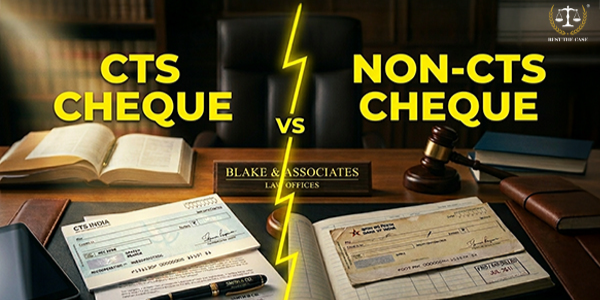

Over the last few decades, banking has changed significantly with digital technology. One major milestone was the shift from manual cheque clearing to an automated, image-based system. If you deal with banking transactions, you have probably heard of CTS and Non-CTS cheques. Knowing the difference between them is important because using the wrong type can cause clearing delays, cheque rejection, and even increase security risks. Understanding these cheque types helps ensure smoother and safer banking transactions.
Summary Details
- CTS (Cheque Truncation System) is an image-based cheque clearing system that replaces physical cheque movement with digital image transmission.
- CTS cheques offer faster processing, usually clearing within one day, while Non-CTS cheques may take 3–5 days. CTS cheques include security features such as CTS-2010 marking, watermarks, UV-reactive ink, and standardized paper quality.
- Non-CTS cheques lack uniform security standards, making them more vulnerable to fraud, forgery, and alterations.
- The Negotiable Instruments Act, 1881 recognizes truncated and electronic cheques as legally valid instruments.
- CTS eliminates risks associated with physical transportation, including loss, theft, damage, and delays.
- Non-CTS cheques are largely phased out and may be rejected by banks during regular clearing.
- CTS applies to both cheques and demand drafts, ensuring standardized security and processing.
- If you still hold a Non-CTS chequebook, replace it with a CTS-2010 compliant chequebook to avoid transaction issues.
What are CTS Cheques?
CTS (Cheque Truncation System) is an online image-based cheque clearing system introduced to make cheque processing faster and easier. Instead of sending the physical cheque from the presenting bank to the drawee bank, a digital image of the cheque is shared along with important details such as the MICR code and date. CTS cheques follow standard quality and security requirements, including special paper, watermarks, and security ink, so they can be scanned accurately and verified by automated systems.
Legal Provisions Involved
- The Negotiable Instruments (NI) Act, 1881 (India): To facilitate CTS, the Government of India amended the NI Act (specifically via the Information Technology Act, 2000, and subsequent amendments to Section 6 and Section 64). Under these amendments, the definition of a "cheque" was expanded to include "a truncated cheque" and "a cheque in the electronic form."
- Legal Validity of Images: The amended law dictates that an electronic image of a truncated cheque carries the exact same legal weight, rights, and liabilities as the physical paper instrument.
- The Payment and Settlement Systems Act, 2007: This empowers central banks to regulate and supervise electronic payment systems, providing the operational guidelines under which CTS infrastructure functions safely.
What are Non-CTS Cheques?
Non-CTS cheques are the traditional paper instruments that were used before the digitization of the clearing layout. They lack standardized security features and do not have uniform dimensions or paper quality. When a Non-CTS cheque is deposited, it must physically travel from the bank where it was deposited to the bank branch where the check-issuer holds their account.
Legal Provisions Involved
- Physical Presentment: Under the original sections of the Negotiable Instruments Act, a cheque had to be physically presented to the drawee bank to demand payment. Failure to present the physical paper meant the presentation was legally incomplete.
- Liability Framework: If a physical cheque was lost or damaged in transit between banks during the clearing cycle, complex legal liabilities arose regarding which bank held the risk of loss.
- Phasing Out Mandates: Central banking authorities globally issued regulatory circulars (such as the RBI directives in India) invoking their statutory powers to mandate that banks stop accepting Non-CTS paper for clearing, effectively phasing out their legal utility in mainstream banking.
Difference Between CTS and Non-CTS Cheques
CTS and Non-CTS cheques differ significantly in terms of security, processing speed, cost, and operational efficiency. Understanding these differences helps in making informed banking decisions.

Conclusion
The move from Non-CTS to CTS cheques is an important step toward safer, faster, and more efficient banking. Non-CTS cheques belong to an older system that relied on manual processing and had a higher risk of fraud. CTS cheques use digital technology to improve security and make transactions smoother. If you still have a non-CTS chequebook, contact your bank branch and replace it with a CTS-2010 compliant chequebook to avoid cheque rejection.CTS vs Non-CTS Cheques: Key Differences Explained
Disclaimer: This blog is for informational purposes only. If you need legal consultation, please contact an experienced civil lawyer.
Frequently Asked Questions
Q1. How do I identify if my cheque book is CTS-2010 compliant?
You can easily identify a CTS cheque by looking for the phrase "CTS-2010" printed vertically on the extreme left edge of the cheque leaf. Additionally, holding the cheque up to the light will reveal a distinct watermark (like "CTS INDIA" or the bank's official logo), and the phrase "Please sign above this line" is printed in micro-lettering.
Q2. Are Non-CTS cheques still accepted by banks?
No. Central banking regulators have advised banks to stop clearing Non-CTS cheques in standard clearing cycles. While some banks might occasionally accept them under exceptional circumstances or separate, slow-clearing schedules, they are prone to rejection and attract processing penalties.
Q3. Does the Cheque Truncation System (CTS) apply to demand drafts as well?
Yes. The standardized security features, paper quality, and electronic image-clearing protocols mandated under the CTS framework apply uniformly to both modern cheques and Demand Drafts (DDs) to ensure uniform banking security.

 Get Expert Advice and Solutions
Experienced lawyers for all legal matters wether it is for Family, Property, Criminal Cases, and More
Consult Now