


Business & Compliance
Drag-Along & Tag-Along Rights Explained For Founders And Investors
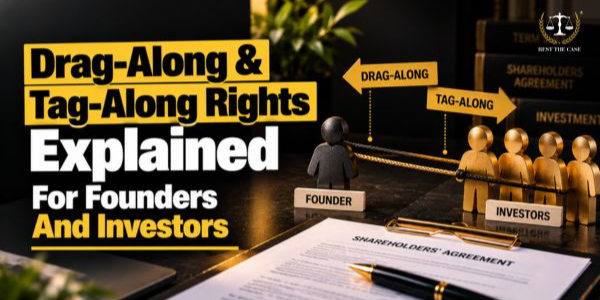

Drag-along and tag-along rights are contractual clauses in a shareholders' agreement that dictate how ownership changes during the sale, merger, or acquisition of a company. They balance control between majority and minority stakeholders. If a buyer wants 100% of the company, the majority can "drag" the minority along, compelling them to sell their shares on the exact same price, terms, and conditions.
What Are Drag-Along and Tag-Along Rights?
Tag-along rights allow minority shareholders to join a sale when a majority shareholder decides to sell their shares to an outside buyer. This protects smaller investors from being left in a company controlled by a new owner they may not know or trust.
Drag-along rights allow certain majority shareholders or investors to require other shareholders to sell their shares as part of a larger transaction. This is especially useful when a buyer wants to acquire the entire company and does not want a few shareholders to delay the deal.
How Do Tag-Along Rights Work?
Tag-along rights mainly protect minority shareholders, including angel investors, early-stage investors, and other shareholders who own a smaller percentage of the company. These rights allow them to sell their shares when a major shareholder receives an offer from an outside buyer.
When Are Tag-Along Rights Triggered?
A tag-along right usually applies when a founder, majority shareholder, or key investor receives a genuine offer from a third-party buyer to purchase a specified number or percentage of shares. The exact conditions depend on the Shareholders' Agreement. For example, the clause may apply when a founder plans to sell more than 10% of their shareholding or when a transaction changes control of the company.
Who Can Use These Rights?
Minority shareholders who have tag-along rights can decide whether they want to participate in the proposed sale. Once the selling shareholder provides the required notice, eligible investors can exercise their rights within the period mentioned in the agreement. They are generally not forced to sell their shares simply because the majority shareholder has decided to exit.
Same Price and Terms
One of the main benefits of tag-along rights is that participating shareholders generally receive the same price per share and comparable sale terms as the main seller, subject to the agreement. The founder or majority shareholder cannot simply sell their stake and ignore the rights of eligible minority shareholders.
If the buyer is unwilling to purchase all the shares offered under the tag-along provision, the agreement may require the main seller to reduce the number of shares they sell so that eligible minority shareholders can participate.
Example of Tag-Along Rights
Suppose Founder A owns 60% of Startup X, while Angel Investor B owns 10%. A buyer offers to purchase Founder A's shares for ₹100 per share. If Investor B has tag-along rights, they may choose to sell their shares to the same buyer at ₹100 per share, subject to the agreement's conditions.
If the buyer wants to acquire only a fixed percentage of the company, the founder and investor may need to reduce their respective sale quantities proportionately. This arrangement gives the minority investor a chance to exit instead of remaining in a company under new ownership.
How Do Drag-Along Rights Work?
Drag-along rights serve a different purpose. They help majority shareholders and investors complete a sale when a buyer wants to acquire the entire company or a controlling stake. Without these rights, even a small shareholder could delay a transaction by refusing to sell their shares or sign the required documents.
When Are Drag-Along Rights Triggered?
A drag-along right generally applies when a buyer makes a qualifying offer and the required shareholders approve the transaction. The buyer may insist on acquiring 100% of the company's shares. In that situation, the majority may need the remaining shareholders to sell their holdings as well. The conditions for triggering the right must be stated in the Shareholders' Agreement.
What Approval Is Required?
Drag-along rights do not apply automatically whenever a majority shareholder wants to sell. The agreement usually specifies the approval threshold needed to activate them. For example, the clause may require approval from shareholders holding 75% of the company's shares. It may also require the consent of the founders or a particular investor group. The required threshold depends on the negotiated terms and the company's legal documents.
What Happens to Minority Shareholders?
Once the required conditions are met, the shareholders covered by the clause may be required to sell their shares to the buyer. They must follow the agreed sale terms and complete the necessary transfer documents. Their personal disagreement with the transaction may not be enough to stop the sale if the drag-along provision is validly triggered. However, the rights and obligations of each shareholder depend on the agreement and applicable law.
Example of Drag-Along Rights
Imagine that a large company offers to acquire Startup Y for ₹400 crore. The buyer wants complete ownership before finalising the deal. The founders and major investors, who together own 85% of the startup, agree to the sale. However, an early adviser holding 2% of the shares refuses to participate.
Without a suitable drag-along provision, this refusal could create delays or legal difficulties. If a valid drag-along clause applies and all required conditions are met, the majority may be able to require the adviser to sell their shares on the agreed terms. This allows the transaction to proceed without giving a small shareholder an automatic right to block the entire acquisition.
Drag-Along vs Tag-Along: What Is the Difference?
Factor | Tag-Along Rights | Drag-Along Rights |
|---|---|---|
Main purpose | Protect minority shareholders | Help complete a company sale |
Main beneficiaries | Minority investors and smaller shareholders | Majority shareholders, founders and lead investors |
Nature of the right | Optional for eligible shareholders | Can be compulsory for shareholders covered by the clause |
Main effect | Allows investors to join a sale | Requires shareholders to participate in a qualifying sale |
Common situation | Founder or major investor sells shares | Buyer wants to acquire the entire company |
Key protection | Same sale price and agreed terms | Clear sale terms and safeguards for affected shareholders |
Why Are These Rights Important in a Shareholders' Agreement?
- Protects exit opportunities: Minority investors can get an opportunity to sell their shares when a major shareholder exits.
- Reduces disputes: Clear rules help prevent disagreements when a buyer makes an acquisition offer.
- Makes transactions easier: Buyers may prefer a company where the share transfer process is already defined.
- Clarifies shareholder obligations: Founders and investors know when they can sell and when they may be required to participate in a transaction.
- Works with other transfer restrictions: These rights may operate alongside a Right of First Refusal (ROFR) or Right of First Offer (ROFO).
ROFR and ROFO provisions generally give existing shareholders certain rights before shares are sold to an outside buyer. The Shareholders' Agreement should explain how these provisions interact with drag-along and tag-along rights.
What Should a Drag-Along Clause Include?
- Trigger event: Define which transactions can activate the right, such as a genuine third-party offer for the entire company or a change of control.
- Approval threshold: State the percentage of shareholder approval required. The agreement may also require founder or lead-investor consent.
- Notice period: Specify how much advance notice shareholders must receive and which transaction documents must be provided.
- Sale price and payment terms: Explain the price per share and whether payment will be made in cash, shares of the acquiring company or a combination of both.
- Different share classes: Explain how preference shares, ordinary shares, and liquidation preferences will be treated during the sale.
- Minimum valuation: Consider including a minimum sale price or valuation threshold to prevent shareholders from being forced into a sale below an agreed level.
- Non-cooperation: State the process to follow if a shareholder refuses to sign the required transfer documents. Any power of attorney or alternative signing mechanism must be properly drafted and legally valid.
What Should a Tag-Along Clause Include?
- Trigger event: Define when the right applies. For example, it may be triggered when a founder sells more than a specified percentage of their shares.
- Number of shares: Clarify whether minority shareholders can sell all their shares or only a proportionate part of their holdings.
- Notice and response period: Specify how the selling shareholder must notify other shareholders and how long they have to exercise the right. The agreement may provide a period of 14 to 30 days.
- Same price and terms: Ensure the agreement explains how participating shareholders will receive the same price and comparable payment terms.
- Limited buyer demand: Explain what happens if the buyer does not want to purchase all the shares offered. The agreement may require the original seller to reduce their sale to accommodate participating shareholders.
- Permitted transfers: Consider excluding certain internal transfers, such as transfers to family trusts or wholly owned entities, where appropriate and legally permitted.
Are Drag-Along and Tag-Along Rights Enforceable in India?
Drag-along and tag-along provisions are commonly used in Indian startup funding, venture capital and private equity transactions.
Contractual Rights Under Indian Law
These provisions are generally included in a Shareholders' Agreement and create contractual obligations between the parties. Their validity and enforcement depend on the agreement, applicable law and the facts of the transaction. The Indian Contract Act, 1872, is relevant to contractual obligations. However, a clause should not be assumed to be enforceable in every situation merely because the parties have signed it.
Companies Act, 2013
Section 58(2) of the Companies Act, 2013, addresses the transferability of shares in public companies. Private companies are subject to their own legal framework and must maintain the restrictions required for their private status. Share transfer arrangements must comply with the Companies Act and other applicable legal requirements.
Aligning the SHA With the Articles of Association
One important step is to check whether the company's Articles of Association (AoA) support the relevant provisions in the Shareholders' Agreement. An SHA may contain detailed drag-along and tag-along clauses, but problems can arise if the company's AoA does not properly reflect those arrangements. To improve legal clarity, the parties should consider the following:
- Make the company a party to the relevant agreement where appropriate.
- Include suitable share transfer provisions in the AoA.
- Obtain the necessary shareholder approvals to amend the AoA.
- Ensure that the agreement and company documents are consistent.
Foreign Investment and Regulatory Requirements
Transactions involving foreign investors may also need to comply with FEMA and applicable RBI pricing rules. SEBI requirements may be relevant where listed companies or regulated transactions are involved.
What Should Founders Check Before Agreeing to These Rights?
- Review the drag-along threshold: Avoid agreeing to a threshold that allows investors to force a sale without considering the founder's agreed protections.
- Negotiate a minimum valuation: Where appropriate, set a minimum price or valuation below which a drag-along sale cannot proceed.
- Limit personal liability: Review any warranties, indemnities and other personal obligations that may apply during a sale.
- Check notice periods: Make sure the agreement gives shareholders enough time to review the transaction and understand their obligations.
- Review consent requirements: Confirm whether founder approval or approval from specific investor groups is required.
- Understand the exit process: Check what happens if the founder disagrees with the buyer or the proposed sale terms.
What Should Investors Check Before Investing?
- Check tag-along protection: Confirm whether the right applies when founders, key executives or major shareholders sell their shares.
- Review drag-along provisions: Ensure that the agreement clearly explains how a complete exit can take place.
- Consider future shareholders: Check how the provisions will apply to new investors, employees holding shares and other eligible shareholders.
- Understand liquidation preferences: Confirm how preferred shareholders will receive sale proceeds and how their contractual rights will be treated.
- Review signing arrangements: Where appropriate, include a legally valid process for completing share transfers if a shareholder fails to cooperate.
- Check legal enforceability: Make sure the SHA, AoA and relevant corporate approvals are consistent.
Common Mistakes When Drafting These Clauses
- Using Unclear Terms: The agreement should specify the transaction type, shareholding percentage or approval threshold that activates the rights.
- Failing to Define Payment Terms: The parties should clarify whether the buyer will pay in cash, shares or another form of consideration.
- Ignoring the Articles of Association: A mismatch between the SHA and AoA can create legal uncertainty.
- Overlooking Regulatory Requirements: Foreign investment and other regulated transactions may involve additional pricing, reporting and transfer requirements.
- Leaving Out Certain Shareholders: If employees, advisers or future investors are not properly covered by the transaction documents, completing a sale may become more difficult.
Conclusion
Drag-along and tag-along rights help founders and investors manage share sales and plan business exits. Tag-along rights protect minority shareholders, while drag-along rights can help complete a full company sale. Before agreeing to either provision, review the sale conditions, valuation safeguards and legal documents carefully. A well-drafted agreement can reduce disputes and make future exits smoother.
Disclaimer: This blog is for informational purposes only. If you require legal consultation, kindly contact an experienced Corporate Lawyer.
Frequently Asked Questions
Q1. What is the difference between drag-along and tag-along rights?
Tag-along rights allow eligible minority shareholders to join a sale initiated by a majority shareholder. Drag-along rights allow qualifying majority shareholders to require other shareholders to participate in a sale, subject to the agreement and applicable law.
Q2. Can a founder be forced to sell shares under a drag-along clause?
Yes. A founder may be required to sell shares if a valid drag-along clause applies and its conditions are met.
Q3. Can an investor use tag-along rights to exit a startup?
Yes. If a founder or another qualifying shareholder plans to sell shares, an investor with tag-along rights may be able to sell their own shares to the same buyer under the agreed conditions.
Q4. Are drag-along rights legal in India?
Drag-along rights are commonly used in India and may be enforceable when properly structured. Their implementation must be consistent with the Shareholders' Agreement, the Articles of Association, the Companies Act, 2013, and any other applicable regulations.
Q5. Should these rights be included in the Articles of Association?
The SHA and AoA should be reviewed together. Incorporating appropriate provisions into the AoA can improve consistency and support enforceability, subject to the applicable law and the company's circumstances.

 Get Expert Advice and Solutions
Experienced lawyers for all legal matters wether it is for Family, Property, Criminal Cases, and More
Consult Now