


Business & Compliance
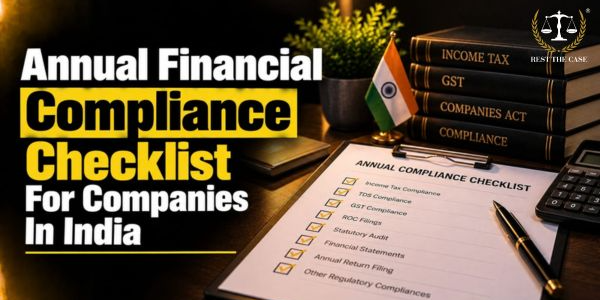
Annual Financial Compliance Checklist For Companies In India

1.1. Factors That Shape Your Company’s Checklist
2. What Financial Statements Should a Company Prepare Every Year?2.1. Core Components of Annual Financial Statements
2.2. Why Reconciliation Before Finalization Matters
3. Does Your Company Need a Statutory Audit? 4. What Income Tax Compliance Should Companies Complete Annually? 5. What ROC and MCA Annual Filings Should Companies Track? 6. What Are the Most Common Annual Financial Compliance Mistakes? 7. Annual Financial Compliance Checklist for Companies 8. How Can Companies Create an Annual Financial Compliance Calendar? 9. ConclusionCompanies in India need to complete various annual financial and regulatory compliances depending on their business structure, turnover, tax registrations, and operations. These may include preparing financial statements, conducting audits where applicable, filing income tax returns, completing ROC-related filings, reviewing GST and TDS compliance, and maintaining proper financial records. Missing annual compliance requirements can result in penalties and unnecessary legal or financial risks.
What Annual Financial Compliances Does a Company Need to Complete?
- Preparation of Annual Financial Statements: Compiling the year-end Balance Sheet, Profit and Loss account, Cash Flow Statement, and Notes to Accounts.
- Statutory Audit: Engaging an independent Chartered Accountant (CA) firm to audit the company’s books of accounts and issue an audit report.
- Income Tax Compliance: Computing net taxable income, claiming eligible expenses, and filing the annual corporate Income Tax Return (ITR-6).
- ROC/MCA Annual Filings: Submitting financial statements (Form AOC-4) and the annual return (Form MGT-7/MGT-7A) to the Registrar of Companies (ROC).
- GST Annual Compliance: Reconciling annual outward supplies, Input Tax Credit (ITC), and filing the annual GST Return (Form GSTR-9) and reconciliation statement (Form GSTR-9C), where applicable.
- TDS Reconciliation & Filings: Reviewing year-end Tax Deducted at Source (TDS) ledgers, clearing short deductions or payment defaults, and issuing annual employee tax certificates (Form 16).
- Secretarial & Internal Board Compliances: Holding the mandatory Annual General Meeting (AGM), conducting board meetings, and updating statutory registers.
Factors That Shape Your Company’s Checklist
- Type of Company: Private Limited, Public Limited, One Person Company (OPC), or Section 8 (Non-Profit) Company.
- Annual Turnover & Paid-Up Capital: Thresholds dictate additional requirements like Secretarial Audits, Internal Audits, or Cost Audits.
- Industry Sector: Regulated sectors (such as Fintech, NBFCs, Healthcare, or Telecom) face additional reporting guidelines set by bodies like RBI, SEBI, or IRDAI.
- Tax Registrations: Having active GST, IEC (Import Export Code), or state-specific professional tax registrations introduces secondary compliance cycles.
What Financial Statements Should a Company Prepare Every Year?
Under Section 134 and Section 137 of the Companies Act, 2013, every company must prepare and finalize its financial statements at the close of each financial year (April 1 to March 31).
Core Components of Annual Financial Statements
- Balance Sheet: Summarizes the company’s assets, liabilities, and shareholders' equity at the end of the financial year.
- Profit and Loss (P&L) Account: Details the revenues earned, operational costs, depreciation, and net profit or loss generated over the 12-month period.
- Cash Flow Statement: Shows the actual inflow and outflow of cash from operating, investing, and financing activities (mandatory for all companies, except OPCs, small companies, and dormant companies).
- Notes to Accounts: Explanatory notes providing details about accounting policies, contingent liabilities, segment reporting, and breakdowns of general ledger line items.
- Statement of Changes in Equity: Required for companies following Indian Accounting Standards (Ind AS), detailing movements in shareholder equity components.
Why Reconciliation Before Finalization Matters
Before locking your accounts for board approval and audit, every line item on the trial balance must be supported by verifiable documentation.
Financial statements should be systematically reviewed alongside supporting bank statements, sales registers, vendor bills, fixed asset schedules, and physical inventory logs before final sign-off. Leaving un-reconciled suspense accounts or mismatched bank entries unresolved can lead to qualified audit reports or unexpected tax demands during assessments.
Does Your Company Need a Statutory Audit?
A common misconception among early-stage entrepreneurs is that small or unprofitable companies can skip the annual audit. Under the Companies Act, 2013, the rule is straightforward: Every company incorporated in India must undergo a statutory audit by an independent Chartered Accountant, regardless of its turnover, capital, or operational activity.
Purpose of a Statutory Audit
The primary objective of a statutory audit is to provide stakeholders, shareholders, creditors, financial institutions, tax authorities, and potential investors with an independent, unbiased opinion on whether the company’s financial statements are free from material misstatements, fraud, or accounting errors.
The Role of the Statutory Auditor
- Verifying asset titles and confirming physical inventory/cash balances.
- Checking compliance with applicable Accounting Standards.
- Assessing whether transactions comply with corporate law provisions (such as related-party transactions under Section 188).
- Issuing the formal Independent Auditor’s Report, which includes their opinion, notes on internal financial controls (IFC), and statutory reporting under the Companies (Auditor’s Report) Order (CARO), where applicable.
What Income Tax Compliance Should Companies Complete Annually?
Corporate tax compliance under the Income Tax Act, 1961 requires careful evaluation of accounting profits versus taxable profits.
- Review Taxable Income: Start with the net profit before tax from your audited P&L statement. Apply tax adjustments, such as adding back personal expenses, excessive related-party payments, or late TDS deposits, and deducting eligible incentives or brought-forward losses.
- Reconcile Books with Tax Portals: Verify that the revenue reported in your books matches the figures populated in your Form 26AS, Annual Information Statement (AIS), and Taxpayer Information Summary (TIS) on the Income Tax portal.
- Conduct a Tax Audit (Section 44AB): If your company's operational turnover exceeds the prescribed statutory limits (typically ₹1 Crore, or ₹10 Crore if digital transactions exceed 95%), you must get your accounts audited under Section 44AB and submit a Tax Audit Report in Form 3CA/3CB and Form 3CD before filing the tax return.
- Settle Outstanding Tax Liabilities: Verify that all advance tax installments were deposited across the four annual payment quarters (June 15, September 15, December 15, and March 15). Pay any remaining tax balance as Self-Assessment Tax (Section 140A) along with interest for any payment delays (Sections 234A, 234B, and 234C).
- File Form ITR-6: Submit the corporate Income Tax Return electronically using the valid Class-3 Digital Signature Certificate (DSC) of a designated director before the statutory deadline (October 31 for audited companies).
What ROC and MCA Annual Filings Should Companies Track?
Under the administration of the Ministry of Corporate Affairs (MCA), companies must submit annual corporate governance records to the Registrar of Companies (ROC).
Primary ROC Annual Returns
- Form AOC-4 (Financial Statements): Used to file the audited Balance Sheet, Profit & Loss Account, Auditor's Report, Board Report, and Notice of AGM. Companies meeting specific turnover/capital criteria or listed entities must file this in XBRL (eXtensible Business Reporting Language) format.
- Form MGT-7 / MGT-7A (Annual Return): Captures details regarding the company's registered address, principal business activities, shareholding pattern, transfer of shares, director/KMP remuneration, board meetings held, and member attendance. Small companies and OPCs file Form MGT-7A.
Associated Annual MCA Compliances
- Dir-3 KYC: Every individual holding a Director Identification Number (DIN) must complete annual KYC verification before September 30.
- Form DPT-3: Annual return reporting outstanding loans, deposits, or transactions not treated as deposits, due by June 30.
- Form MSME-1: Half-yearly return detailing outstanding payments due to Micro and Small Enterprises that exceed 45 days.
What Are the Most Common Annual Financial Compliance Mistakes?
- Waiting Until the Last Minute: Delaying book closure until September or October leaves little time to resolve audit queries, leading to rushed filings, errors, and late fees.
- Neglecting Ledger Reconciliations: Skipping month-on-month reconciliations between general ledgers and external tax portals (such as GSTR-2B or Form 26AS) often leads to missed tax credits or unnoticed tax liabilities.
- Mismatch Between Books and Tax Returns: Filing an Income Tax Return or ROC filing with turnover or expense figures that differ from your audited financial statements triggers automated system notices.
- Ignoring Related-Party Transactions: Failing to identify, disclose, or seek board approval for transactions with directors, relatives, or group entities under Section 188 of the Companies Act.
- Missing Annual MCA Filings: Assuming that filing income tax returns is enough. Skipping ROC filings (Form AOC-4 and MGT-7) results in daily late filing fees (typically ₹100 per day per form with no upper cap) and risks director DIN deactivation.
- Overlooking Small Operational Liabilities: Forgetting to pay annual state-specific compliance items, such as trade licenses or local professional tax, which can stall future corporate transformations or bank funding.
Annual Financial Compliance Checklist for Companies
Compliance Area | What to Check |
|---|---|
Financial Statements | Prepare and balance the year-end Balance Sheet, P&L Account, Cash Flow Statement, and Notes to Accounts. |
Statutory Audit | Appoint a CA firm, provide audit schedules, resolve auditor inquiries, and receive the signed Audit Report. |
Income Tax | Compute net taxable income, file the Tax Audit Report (Form 3CD) if applicable, and file Form ITR-6. |
GST Reconciliations | Reconcile sales, verify eligible ITC with GSTR-2B, correct mismatches, and prepare Form GSTR-9/GSTR-9C. |
TDS Compliance | Reconcile expense ledgers against TDS deductions, verify challan deposits, and issue Forms 16 and 16A. |
ROC/MCA Filings | File Form AOC-4 (Financials), Form MGT-7/7A (Annual Return), DIR-3 KYC, and Form DPT-3 within statutory timelines. |
Accounting Records | Finalize all general ledger entries, post depreciation schedules, and verify year-end provisions. |
Bank Records | Obtain annual bank balance confirmation certificates and prepare year-end Bank Reconciliation Statements (BRS). |
Document Archiving | Compile an organized archive containing invoices, tax challans, contracts, board minutes, and audit trails. |
Pending Notices | Check government portals (Income Tax, GST, MCA) for any outstanding notices, demands, or pending inquiries. |
Compliance Calendar | Track key deadlines for the upcoming financial year and update board approval schedules accordingly. |
How Can Companies Create an Annual Financial Compliance Calendar?
Managing compliance effectively requires shifting from a reactive year-end rush to an ongoing process integrated into your everyday accounting routines.
Phase 1: Throughout the Year (Monthly Operations)
- Close monthly accounts by the 10th of every month.
- Complete monthly GST filings (GSTR-1, GSTR-3B) and TDS deposits (by the 7th of every month).
- Conduct monthly bank reconciliations and verify vendor invoice entries.
- Maintain physical and digital copies of all contracts, purchase orders, and major expense vouchers.
Phase 2: Prior to Year-End (January to March)
- Estimate total annual taxable income and deposit the final installment of Advance Tax by March 15.
- Conduct a preliminary pre-audit review of sales ledgers, purchase ledgers, and inventory counts.
- Send balance confirmation requests to major vendors, customers, and lenders.
- Verify that all directors have completed their annual disclosure of interest (Form MBP-1).
Phase 3: Post Year-End / Annual Compliance Execution (April to October)
- Freeze trial balances and hand over books to the Statutory Auditor.
- Convene the Board Meeting to approve the audited financial statements and draft the Board's Report.
- Hold the Annual General Meeting (AGM) within 6 months from the close of the financial year (typically by September 30).
- File Form AOC-4 (within 30 days of the AGM) and Form MGT-7 (within 60 days of the AGM).
- Submit the Tax Audit Report and file corporate Income Tax Return (Form ITR-6) before the October 31 deadline.
You Might Find These Helpful
- What Is Tax Audit and Business Tax Litigation? Process, Notices & Legal Remedies
- How Can Businesses Ensure TDS Compliance in India? Rules, Rates, Returns & Penalties
Conclusion
Annual financial compliance helps companies maintain accurate records, meet statutory obligations, and avoid unnecessary penalties or disputes. Businesses should complete financial statements, audits, tax filings, GST and TDS reconciliations, and ROC/MCA filings within applicable timelines. Regularly reviewing bank records, accounting entries, supporting documents, notices, and upcoming deadlines can make the process more organized.
Disclaimer: This blog is for informational purposes only. If you require legal consultation, kindly contact an experienced Corporate Lawyer.
Frequently Asked Questions
Q1. What annual financial compliances are required for companies in India?
Companies in India must complete annual financial statements, statutory audits, ITR-6 filing, ROC returns through AOC-4 and MGT-7, GST reconciliation, and TDS return filing.
Q2. Does every company need a statutory audit?
Yes. Under the Companies Act, 2013, every company incorporated in India must have its accounts audited annually by an independent Chartered Accountant, regardless of turnover.
Q3. What financial statements must a company prepare annually?
A company must prepare a Balance Sheet, Profit and Loss Account, Cash Flow Statement (unless classified as an OPC, small company, or dormant company), Statement of Changes in Equity (if Ind AS applies), and explanatory Notes to Accounts.
Q4. What GST checks should be completed before year-end?
Key GST checks include reconciling GSTR-1, GSTR-3B, and Profit & Loss data; matching ITC with GSTR-2B; reversing ineligible ITC; verifying notes.
Q5. What TDS compliances should companies review annually?
Companies should review expense ledgers, verify correct TDS sections, deposit withheld tax through Challan ITNS 281, reconcile returns, clear TRACES defaults, and issue Forms 16 and 16A.

 Get Expert Advice and Solutions
Experienced lawyers for all legal matters wether it is for Family, Property, Criminal Cases, and More
Consult Now